Chamomile is probably the most widely drunk floral infusion in Britain, and the one most people have only ever had in its worst form. A supermarket teabag full of grey-green dust makes a thin, hay-like cup, and a great many people have written off chamomile entirely on that basis.
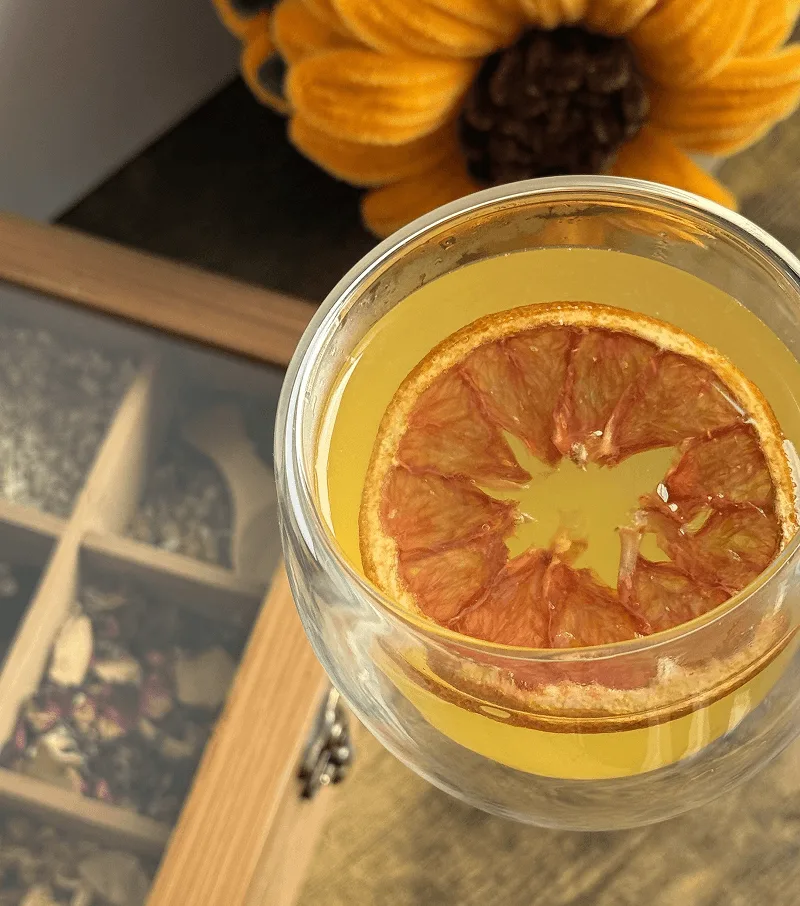
Whole flowers are a genuinely different drink. Brewed properly they give a clear golden cup that tastes of apple skin, dried hay and a light honeyed sweetness, with a clean finish and no astringency at all. If you think you dislike chamomile, you have most likely never actually had it.
The apple note is not marketing licence, incidentally — it is in the name. Chamomile comes from the Greek khamaimēlon, literally "earth apple", because the crushed flowers smell like apples. The Spanish manzanilla means "little apple" for exactly the same reason.
| Chamomile tea | In short |
|---|---|
| Caffeine | None |
| Water | 90–95°C, just off the boil |
| Steep | 3–5 minutes, covered; never longer |
| Tastes like | Apple skin, hay and honey; clear golden cup |
| Best for | The last cup of the day |
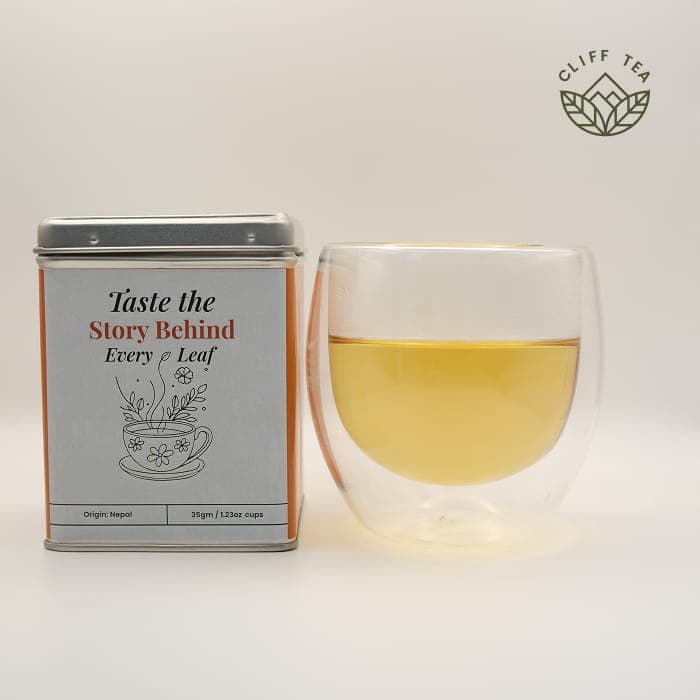
| Our pack | 40g pouch or 35g box, whole flower heads |
Why you'll love it
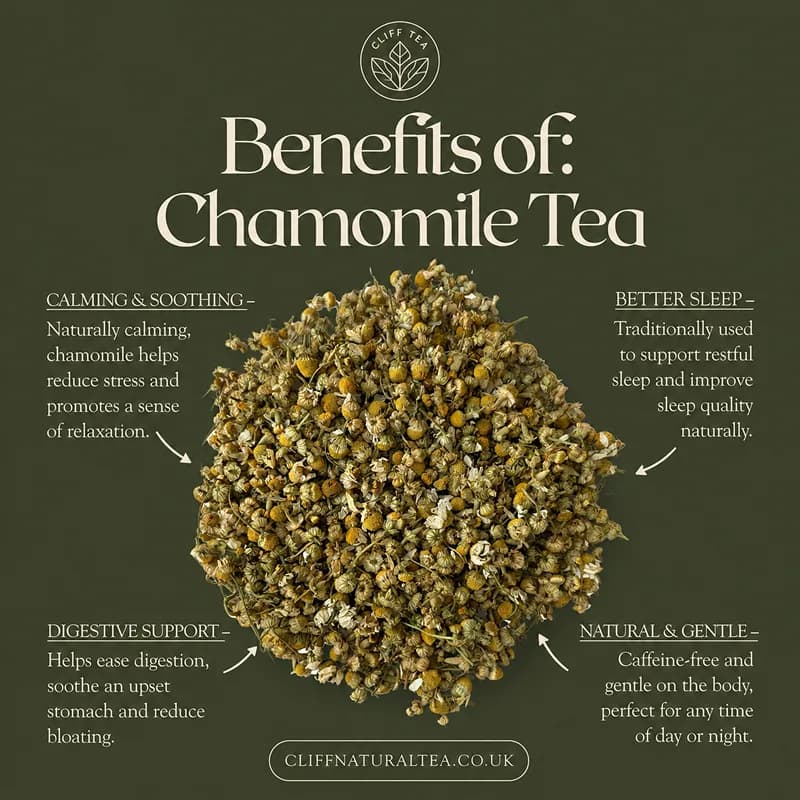
- May promote relaxation. The reason chamomile became the world's default evening drink. A warm, caffeine-free cup as part of a wind-down routine is a small ritual that does real work.
- Naturally caffeine-free. Not decaffeinated — there was never any caffeine to remove, so there is not even the trace amount that decaf tea retains.
- May soothe digestion. A long-standing traditional use across Europe, and the reason chamomile is so often taken after a meal.
- Gentle enough for any time. No tannin, no astringency, nothing that clashes with an empty stomach.
- Genuinely delicious when it is good. Apple, hay and honey, with a clean golden colour. Whole flowers taste nothing like the dust in a teabag.
- Rich in plant compounds. Chamomile's character comes from apigenin, alpha-bisabolol and the flower's aromatic oils — the same compounds behind its long history of use.
How to brew chamomile tea
Chamomile is more forgiving than green tea but less forgiving than most people assume. Its character sits in volatile aromatic oils, and volatile means exactly what it sounds like — leave the cup uncovered and a good part of the aroma leaves with the steam.
- 1
Measure 1–2 teaspoons per cup
Roughly 2g per 200ml. Chamomile is bulky and light, so a teaspoon of whole flower heads weighs far less than a teaspoon of black tea — be more generous than instinct suggests.
- 2
Use water just off the boil
Around 90–95°C. Boil the kettle and let it stand for a minute. A full rolling boil poured straight on drives off the aroma faster than it extracts the flavour.
- 3
Give the flowers room
A wide basket infuser, or brew loose and strain. The flowers need to open and tumble; a cramped tea ball extracts unevenly and gives you a weak, papery cup.
- 4
Steep 3–5 minutes, covered
Put a saucer or lid over the cup. This is the step almost everyone skips, and it is the one that keeps the apple-and-honey aroma in the tea instead of in the room.
- 5
Taste before adding anything
A well-brewed chamomile is already faintly sweet. If you want more, honey suits it far better than sugar, and a slice of lemon lifts it without fighting the florals.
Different ways to drink it
- Hot with honey and lemon. The classic, and hard to improve on. Honey suits chamomile better than any other sweetener.
- Iced. Brew at double strength, cool, then pour over ice with a strip of lemon peel. Because there is no tannin it will not go cloudy or bitter in the fridge the way over-brewed black tea does.
- As a nightcap, warm with a little milk. Unusual, but chamomile is one of the few infusions that takes milk — it turns into something close to a hot floral malt.
- In a bedtime pot. Brew a small pot rather than a cup so there is a second one waiting. Half the benefit is in slowing down for twenty minutes.
- Poaching liquid. Pears or apples poached in strong chamomile pick up an unusual honeyed floral note that works beautifully with the fruit's own sugars.
- In the bath. A muslin bag of flowers under the hot tap. It simply smells extremely good.
Blending chamomile
Chamomile is soft and rounded, which makes it a good partner for anything sharp, fresh or aromatic. Keep it as the majority of the blend — it is easily overpowered.
- With spearmint — one of the best after-dinner combinations there is. The mint cuts the florals and lifts the finish. Try three parts chamomile to one part spearmint.
- With lavender — the classic evening blend, floral and calming. A very small amount of lavender goes a long way.
- With rose buds — softer and prettier, and lovely in a glass pot.
- With butterfly pea — for colour rather than flavour. Blue Calm Tea does this blend for you, with lavender as well.
- With a slice of fresh ginger — not a dry blend, but excellent in winter.
- Ready-blended: Sleep Blend pairs chamomile with ashwagandha for the last cup of the day.
Good to know
- How to spot good chamomile. Whole domed flower heads with visible white petals, bright creamy-yellow rather than grey or brown, and an obvious apple sweetness straight from the dry pouch. If the dry flowers smell of nothing, the brew will taste of nothing.
- Check the ingredients. If the list runs longer than "chamomile flowers", you are usually paying for a green tea base or flavouring compensating for weak raw material. Ours is chamomile flowers and nothing else, which is also why it is genuinely caffeine-free.
- Storage. Airtight, dark and dry. Chamomile is all aromatics, and aromatics are what escape first.
- Allergies. Chamomile is in the daisy family alongside ragweed, chrysanthemum and marigold. If you react to those, approach chamomile carefully.
- If you take medication — particularly blood thinners — or you are pregnant, have a quick word with your GP or pharmacist before drinking it daily.