There are two mints in the tea world and most people have only met the loud one. Peppermint is sharp, cooling and heavy with menthol. Spearmint (Mentha spicata) is its gentler relative: softer, rounder and noticeably sweet, with a fraction of the menthol. It is the mint in chewing gum, the mint in a mojito, and the mint that Moroccan tea is made with.
Brewed on its own it makes a pale green cup that is cool without being medicinal, and clean without being thin. If you have tried peppermint tea and found it too much, spearmint is almost certainly what you were after.
| Spearmint tea | In short |
|---|---|
| Caffeine | None |
| Water | Boiling, 100°C |
| Steep | 3–5 minutes, 1–2 teaspoons per cup |
| Tastes like | Cool, sweet mint with very little menthol |
| Best for | After a meal; iced with lime in summer |
| Our pack | 40g pouch or 35g box, dried whole leaves |
Why you'll love it
- Refreshing after a meal. The traditional use across the Mediterranean and the Middle East, and the reason mint tea arrives after dinner in so many countries.
- Naturally caffeine-free. Spearmint is a herb, not a tea leaf, so there is no caffeine at any point and no reason to avoid it late.
- Sweet without sugar. The flavour compound that dominates spearmint, carvone, reads as sweet on the palate, so a well-made cup needs nothing added.
- Gentle. Far less menthol than peppermint, so no burn and nothing that fights food or other flavours.
- A useful blending leaf. A pinch of spearmint lifts chamomile, hibiscus and green tea without taking over.
- As good cold as hot. Iced spearmint with lime is one of the simplest summer drinks there is.
Spearmint or peppermint?
Peppermint is a hybrid of spearmint and watermint, bred for oil, and its leaves can be 40 per cent menthol. Spearmint has almost none; its character comes from carvone instead, the same compound that gives caraway and dill their sweetness. That is why peppermint tastes cold and sharp and spearmint tastes sweet and green. Neither is better. Peppermint is the one for a blocked head; spearmint is the one for a pot after dinner.
How to brew spearmint tea
- 1
Use 1–2 teaspoons of dried leaf per cup
Dried spearmint is light, so a teaspoon does not weigh much. One is a clean, gentle cup; two is a proper pot-of-mint strength.
- 2
Boiling water
Unlike chamomile or green tea, spearmint takes water straight off the boil without turning bitter. Pour and cover.
- 3
Steep 3–5 minutes
Three for a light cup, five for a full one. It does not turn harsh with a longer steep the way peppermint can.
- 4
Taste before sweetening
Spearmint is already sweet. If you want the Moroccan version, add sugar or honey while hot; otherwise leave it.
- 5
Brew it again
The leaves give a good second steep. Add a minute to the time.
Our general method for loose leaf, including quantities by pot size, is on the brewing guide.
Different ways to drink it
- Plain, after dinner. A small pot for the table. The single best use.
- Moroccan mint tea. Brew a strong green tea (our Apple Rose Green Tea base works), add a generous handful of spearmint and sweeten well. Pour from a height to froth it. Note this version contains caffeine from the green tea.
- Iced with lime. Brew at double strength, cool, pour over ice and squeeze in half a lime. Add a few fresh leaves if you have them.
- Cold brew. A heaped tablespoon in a litre of cold water overnight in the fridge. Softer and sweeter than the hot brew.
- With chamomile before bed. Three parts chamomile to one part spearmint. The mint keeps the chamomile from tasting flat.
- In a jug of water. A teaspoon of dried leaf in a jug of cold water for an hour makes ordinary tap water a great deal more interesting.
Blending spearmint
Spearmint is polite in a blend: it freshens whatever it is put with and rarely dominates unless you let it. Keep it to about a quarter of the mix.
- With chamomile — the classic after-dinner or bedtime pairing. Three to one, chamomile to mint.
- With hibiscus — the mint cuts the acidity and makes it far more refreshing iced. Heart Bloom Tea does this for you, with rose buds as well.
- With green tea — the Moroccan approach, and the reason spearmint and green tea sit so naturally together.
- With rose buds — softer and prettier, good in a glass pot.
- With butterfly pea and lime — the mojito without the rum. Blue in the glass until the lime goes in.
- Or blended to order: pick spearmint as one of up to three teas in Build Your Own Blend.
Good to know
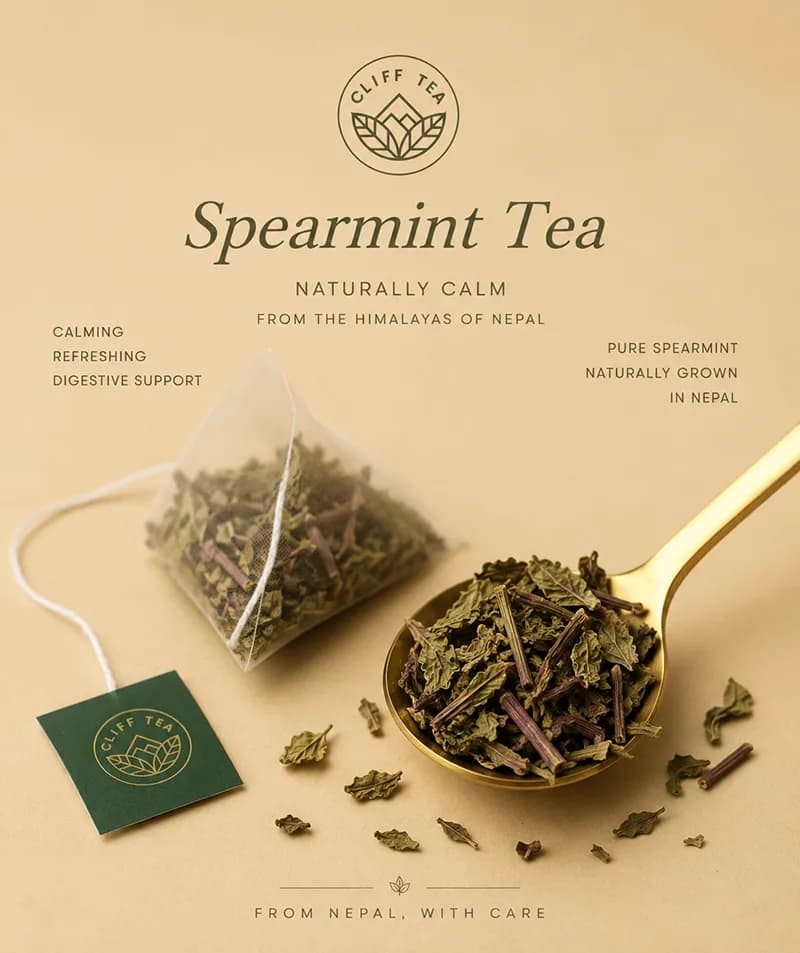
- What is in the pack. Dried spearmint leaves from Nepal, and nothing else. 40g pouch or 35g box.
- How to spot good spearmint. Whole or roughly cut green leaves with a clear sweet-mint smell straight from the pack. Grey-brown dust that smells of very little will brew a cup that tastes of very little.
- Storage. Airtight and out of the light. Mint keeps its aroma well if it is kept dry, and loses it fast if it is not.
- If you have reflux. Mint of any kind can relax the valve at the top of the stomach, and some people with reflux find it makes things worse. If that is you, chamomile or rooibos-style infusions are the gentler choice.
- Try it first. Spearmint is one of the teas you can pick as a free sample.