Hibiscus is drunk almost everywhere and called something different in each place. Agua de Jamaica in Mexico, karkade in Egypt and Sudan, bissap in Senegal, zobo in Nigeria, sorrel across the Caribbean at Christmas, rosella in Nepal. Same plant, same extraordinary ruby cup, entirely separate traditions that all arrived at it independently.
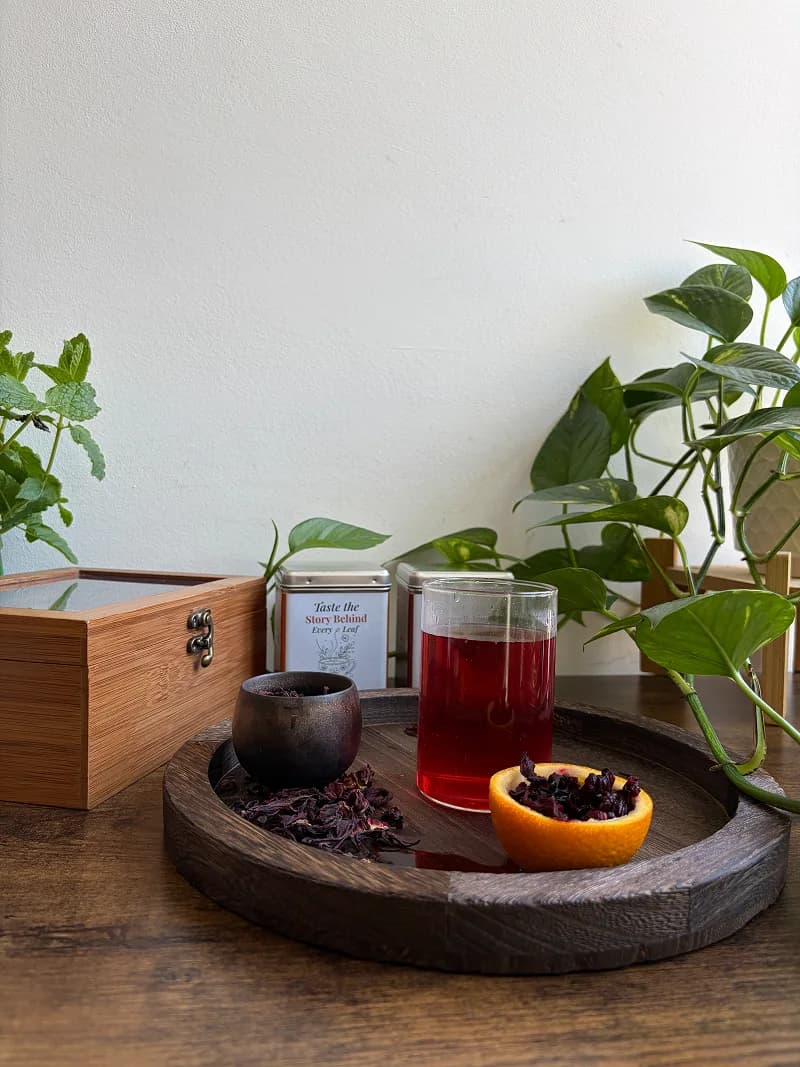
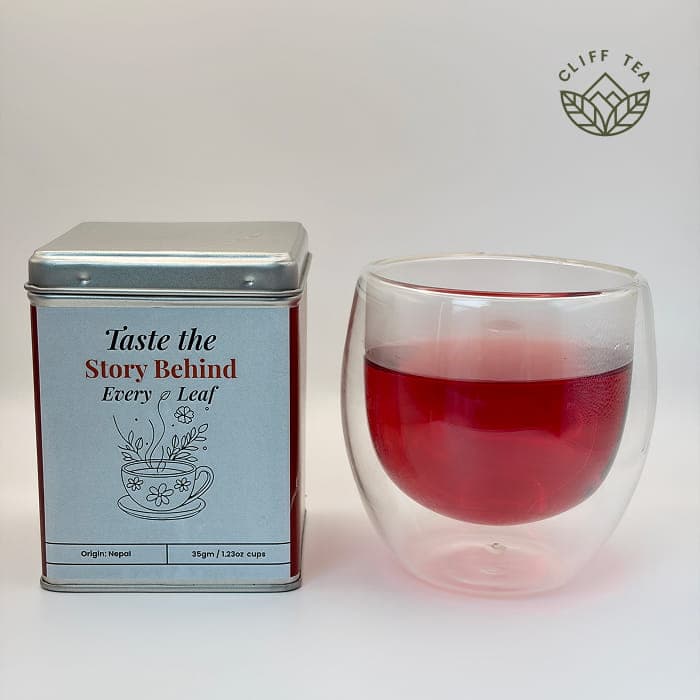
Pour a cup and you understand why. The colour is genuinely startling — a clear, jewel-like crimson that no other infusion in our range comes close to. The flavour is bright and tart, closer to cranberry or sour cherry than to anything floral, and it takes sweetening, citrus and ice better than any tea we sell.
One detail worth knowing before you brew it: you are not drinking the flower. The bloom itself is a pale, cream-and-maroon thing that lasts about a day and then drops off. What gets harvested is the calyx — the fleshy cup of sepals underneath, which keeps swelling after the flower falls until it is thick, crimson and sour. It is usually sold as "petals" as a convenient shorthand, ours included, but if you look at the dried pieces you can see the cup shape. That is where the colour and the tartness live.
| Hibiscus tea | In short |
|---|---|
| Caffeine | None |
| Water | Boiling, 100°C |
| Steep | 5–7 minutes, 1–2 teaspoons per cup |
| Tastes like | Cranberry, sour cherry; deep red in the cup |
| Best for | Iced tea, or hot with honey and ginger |
| Our pack | 50g pouch or 60g box |
Why you'll love it
- High in antioxidants. The crimson colour comes from anthocyanins — chiefly cyanidin-3-sambubioside and delphinidin-3-sambubioside — the same family of plant pigments found in blackcurrants and red cabbage.
- Naturally caffeine-free. Hibiscus is a tisane, not a true tea, so there is no caffeine at any point. The bracing quality people mistake for a lift is simply the acidity.
- May support digestion. A long-standing traditional use across several of the cultures that drink it daily, often taken after a heavy meal.
- Rich in natural fruit acids. Citric, malic and the plant's own hibiscus acid give it that clean, cranberry-like tartness — and make it one of the few infusions that genuinely improves with a little sweetness.
- Outstanding cold. Very few teas are better iced than hot. Hibiscus is one of them, which makes a single pack useful all year.
- A natural colour that needs no help. No flavouring or colouring is doing the work — that red is the calyx itself.
How to brew hibiscus tea
Hibiscus is the opposite of a delicate floral. Where chamomile or jasmine want restraint, the calyx wants full heat and a proper steep — there are no fragile aromatics to scald, and the good stuff extracts slowly.
- 1
Use 1–2 teaspoons per cup
The dried calyces are dense and colour the water fast. Start at one teaspoon per 200ml and work up — it is easy to overdo hibiscus on the first attempt.
- 2
Full boiling water
Straight off the boil at 100°C. Unlike green tea or chamomile, hibiscus takes it happily; the fruit acids need that heat to extract properly.
- 3
Steep 5–7 minutes
Longer than most infusions. The colour arrives in the first minute but the body and fruitiness come later — pull it too early and you get a thin, sharp cup that looks better than it tastes.
- 4
Sweeten while it is hot
If you are going to sweeten at all, do it now — honey or sugar dissolves properly in a hot brew and rounds off the acidity. Nearly every tradition that drinks hibiscus daily sweetens it.
- 5
Finish it with something
A slice of orange, a bruised mint sprig or a coin of fresh ginger transforms hibiscus. It is as much a base as a finished drink.
Our general method for loose leaf, including quantities by pot size, is on the brewing guide.
Different ways to drink it
This is the tea to experiment with. It is robust, it is vividly coloured, and it is almost impossible to ruin.
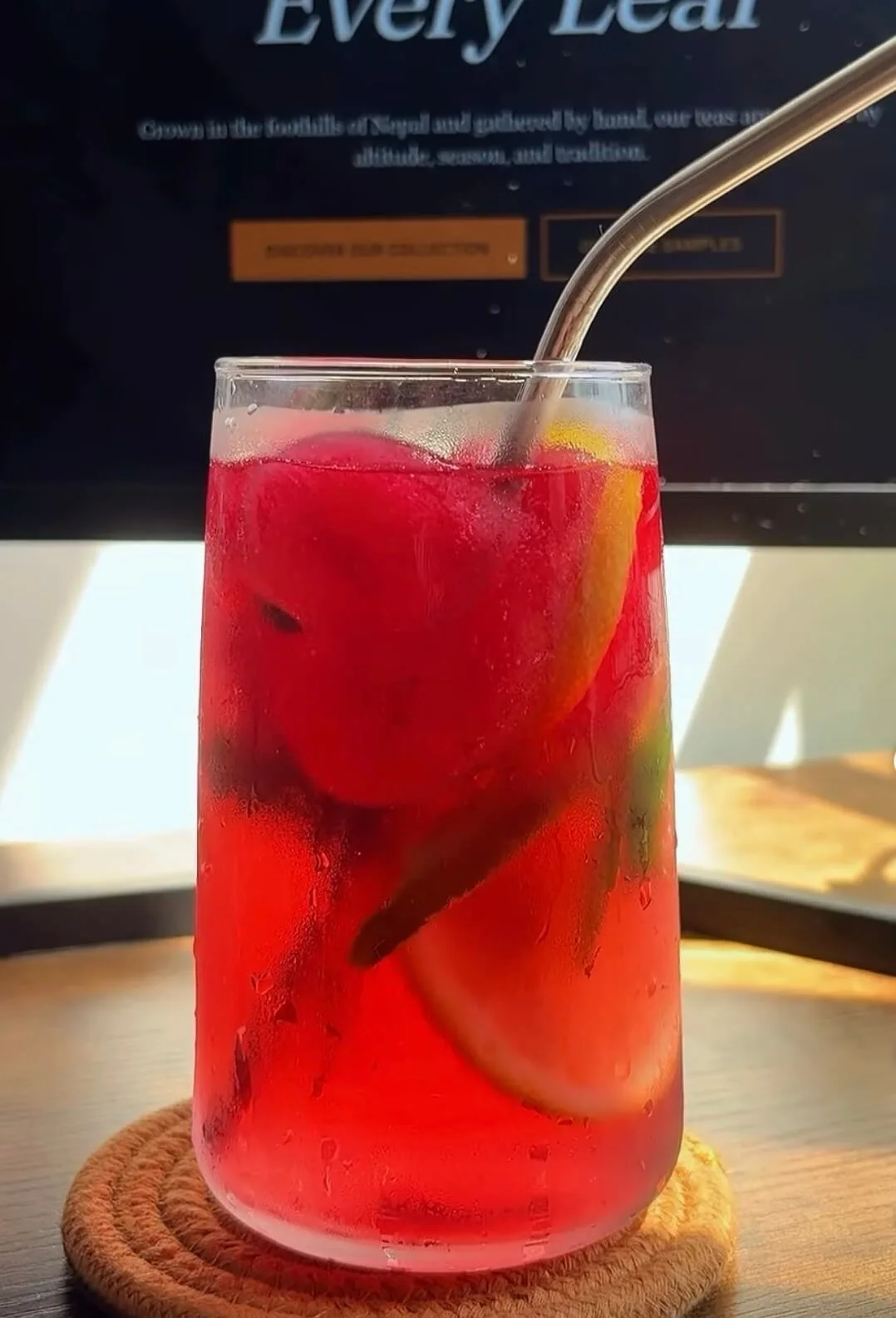
- Agua de Jamaica. Brew at double strength, sweeten while hot, chill completely, then serve over plenty of ice with a wedge of lime. The single best thing you can do with hibiscus and the reason it is a summer staple across Mexico.
- Cold brew. A heaped tablespoon in a litre of cold water, overnight in the fridge, strained in the morning. Cold extraction pulls less acid, giving a rounder, softer, less sharp drink — worth trying if you find the hot version too tart.
- Caribbean sorrel. Steep with cinnamon, cloves, a strip of orange peel and fresh ginger, sweeten generously and chill. A Christmas drink across the islands, and excellent warm in December here.
- Hibiscus spritz. Chilled concentrate topped with sparkling water, over ice with an orange slice. The most convincing alcohol-free thing we know how to make.
- Hot with honey and ginger. The winter version. Grate fresh ginger straight into the pot and steep together.
- As a syrup. Reduce a strong brew with equal sugar for a deep red syrup that keeps for weeks in the fridge — good over yoghurt, in cocktails, or stirred into sparkling water.
- Frozen into ice cubes. Hibiscus cubes in a glass of lemonade turn it slowly pink as they melt.
Blending hibiscus
Hibiscus is loud, which makes it a superb blending base — it gives colour and acidity, and lets something gentler supply the aroma. A rough rule: hibiscus should be no more than half the blend or it flattens everything else.
- With rose buds — the classic pairing. Rose softens the tartness and adds a perfume hibiscus completely lacks. Try roughly two parts hibiscus to one part rose buds.
- With mint. Spearmint cuts the acidity and makes it far more refreshing cold. Excellent iced.
- With apple and rose. Apple Rose Green Tea blended with a little hibiscus gives you fruit, florals and colour in one cup.
- With lemongrass or ginger. Both stand up to hibiscus without being buried by it.
- Ready-blended: Hibiscus Strawberry Lemongrass Tea does the fruit-forward version for you on a green tea base, and Heart Bloom Tea pairs hibiscus with rose buds and a little spearmint.
Good to know
- Storage. Airtight, dark, dry and away from the hob. The anthocyanins that make hibiscus red will fade in strong light, so a clear jar on a sunny shelf is the one thing to avoid. Kept properly it holds its colour and flavour for well over a year.
- It stains. Cups, worktops, light clothing and grout. Rinse things sooner rather than later.
- It is genuinely acidic. As with any acidic drink, the usual dental advice applies — better to drink it in a sitting than to sip it slowly all day, and rinse with water afterwards rather than brushing straight away.
- Brew a second time. A strong first steep still leaves plenty in the calyces. A second, longer infusion makes a perfectly good iced tea.